

















Parent FAQs

What’s on your mind?

Tap the one that sounds most like your family, and we’ll take you straight to the answer. You don’t need the perfect words, and there are no silly questions.

Pick a question

Don’t see your question?

Call, text, or email. Dr. Taylor always answers texts and emails.

I have a feeling my child is behind with talking, but I can’t quite explain why

Trust that feeling. You know your child better than anyone, and you don’t need a list of symptoms or the perfect words to reach out. Many of our families started right here.
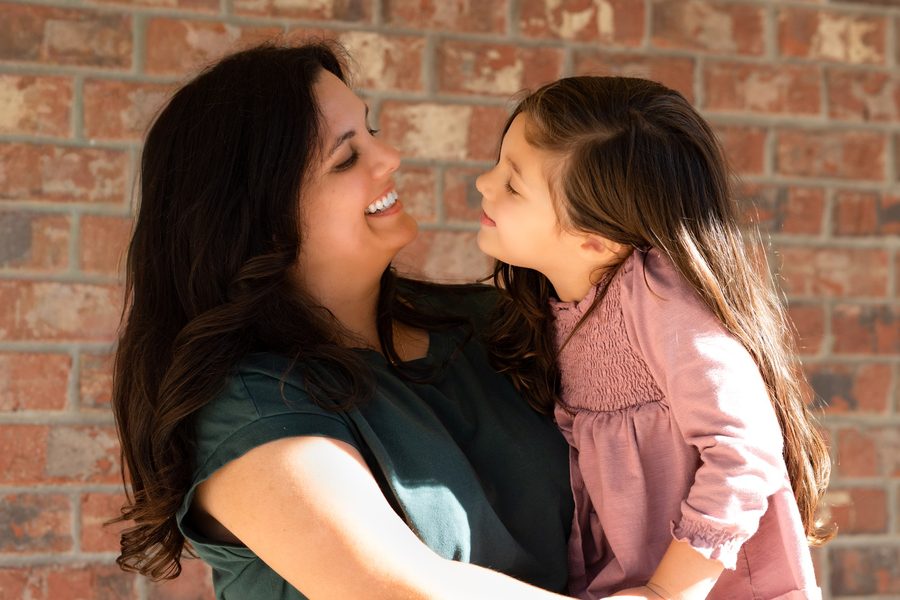
Dr. Taylor and a child grinning at each other, face to face.

You might notice

  • Your child understands a lot, but says less than other kids their age
  • Back-and-forth with your child fizzles out quickly
  • Big frustration or meltdowns when your child can’t get their message across
  • Something just feels different, even when others say to wait and see

Try this at home

  • For one week, jot down the words, sounds, gestures, and phrases your child uses, and what happens right before the hard moments. It gives us a wonderful place to start together.
  • Count every way: pointing, signs, scripts from a favorite show, and devices are all communication, and strengths to build on.

How we can help

A free 15-minute consultation is a real conversation with a speech-language pathologist about what you are seeing. If an evaluation would help, we’ll explain why. No referral needed, and no pressure either way.
Free consultationWhat an evaluation is like

Back to all questions

My child isn’t talking yet, or only uses a few words

Children communicate in so many ways before words: looks, reaching, leading you by the hand, sounds, and gestures. All of it counts, and all of it is something we can build on.

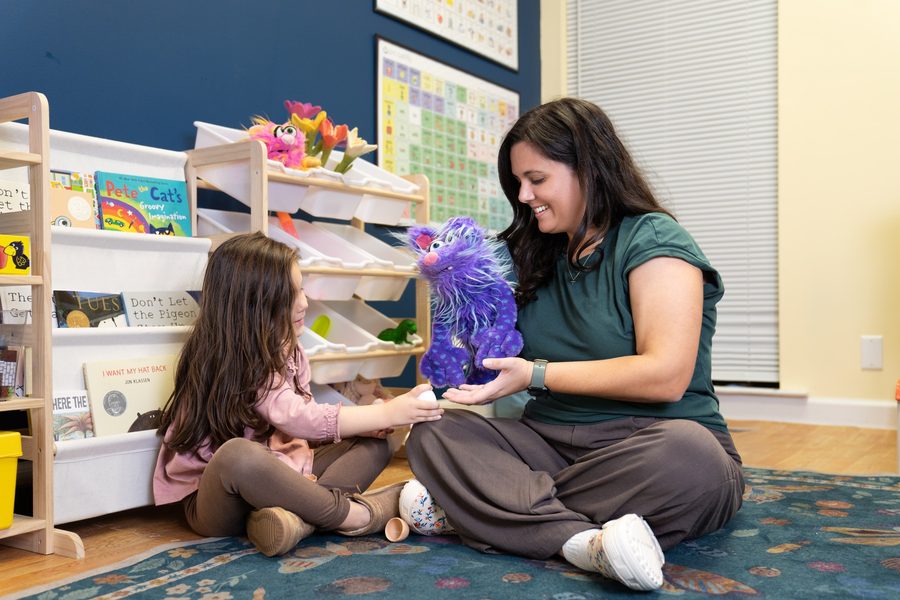
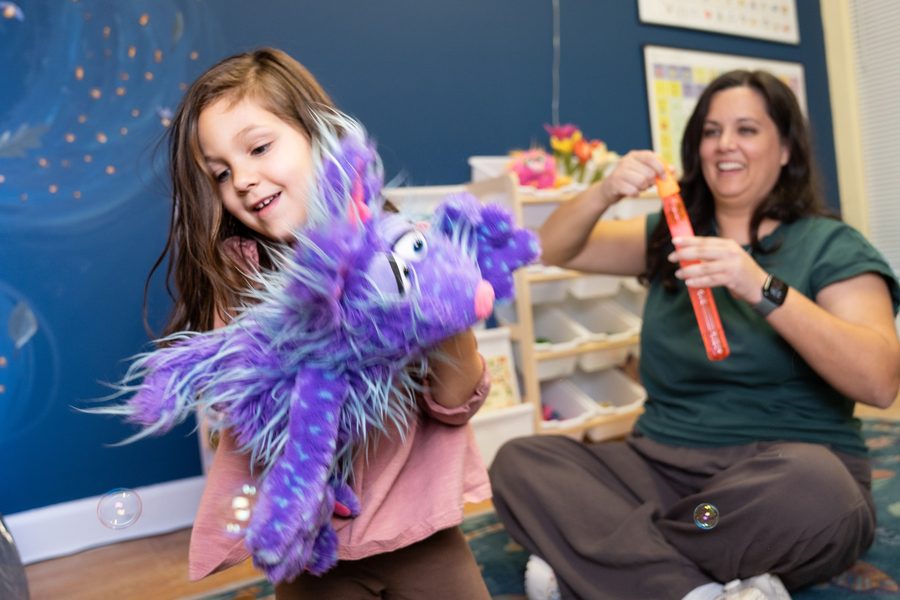
A child laughing as she swings the purple puppet in the play room.

You might notice

  • Your child leads you to what they want instead of asking
  • A few words, or words that come and go
  • Frustration when you can’t figure out what they need

Try this at home

  • Get down on your child’s level and join what they are already doing. Add short, playful phrases with lots of feeling: “up, up, up!”, “uh oh!”, “ready, set, go!”
  • Pause and wait. Give your child room to take a turn with a look, a sound, or a word.

How we can help

We start with connection and play, because language grows best when a child feels calm, safe, and connected. For some children, AAC (a speech device or another way to communicate) gives them a voice right now while spoken language develops.

Free consultationMore about language delays

Back to all questions

My child repeats lines from shows, songs, or things we say

That repeating is called echolalia, and it is communication. Some children learn language in whole chunks first, like “let’s go outside!” or “ready, set, go!”, and each chunk carries a whole meaning or feeling. This is called gestalt language processing.

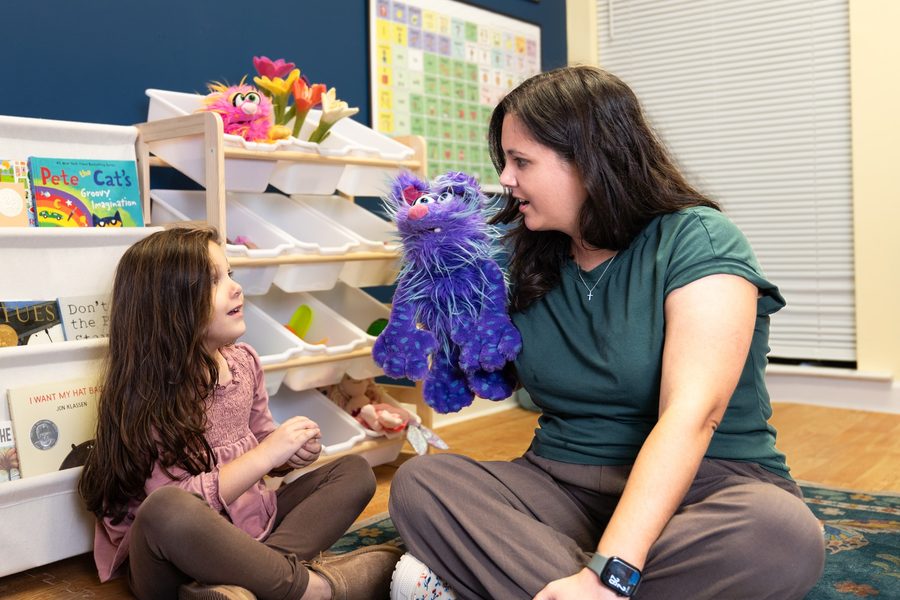
Dr. Taylor and a child meeting the purple puppet on the play room rug.

You might notice

  • Phrases from favorite shows, songs, or people your child loves
  • A line that means something else, like “do you want a snack?” meaning “I want a snack”
  • Longer phrases, but fewer single words early on

Try this at home

  • Get curious about when your child uses a phrase and what it might mean to them.
  • Model short, easy phrases your child can borrow: “let’s go!”, “all done!”, “uh oh!”

How we can help

We honor your child’s scripts and help them break chunks apart over time, so they can build sentences of their own. Dr. Taylor knows this path well: her own daughter developed language this way.

Free consultationGestalt language processing

Back to all questions

My child can ask for things, but seems stuck there

Many children learn to request (“more,” “cookie,” “iPad”) and then get stuck. Requesting is a great start. The next steps are sharing, commenting, saying no, and going back and forth with the people they love.

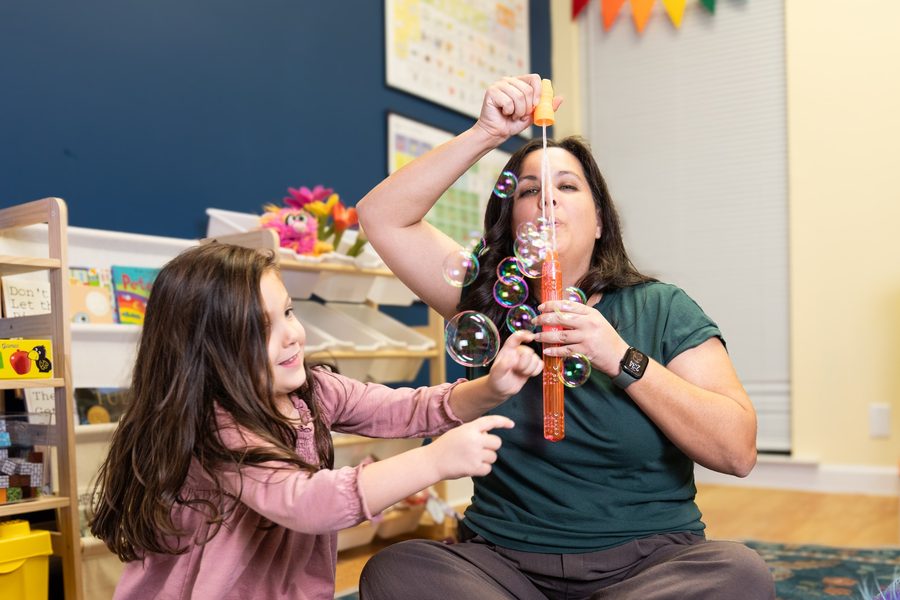
A child reaching to pop bubbles as Dr. Taylor blows them.

You might notice

  • Words used mostly to get things, not to share or show you something
  • Copying words, but rarely using them on their own
  • Back-and-forth that ends after a turn or two

Try this at home

  • Follow your child’s lead and keep the back-and-forth going. Every turn counts, even a look or a giggle.
  • Comment instead of quizzing: “wow, so big!”, “uh oh, it fell!”

How we can help

This is where DIR/Floortime shines. We build connection, back-and-forth, and shared joy first, so your child wants to communicate for more than getting things.

Free consultation

Back to all questions

My child has a hard time connecting with other kids

Every child connects in their own way, and there’s no one right way to be a friend. We don’t try to make kids act like everyone else. We help them understand others, share what they think and feel, and build friendships that feel good to them.

You might notice

  • Your child wants friends but isn’t sure how to join in
  • Play with other kids often ends in frustration or tears
  • Back-and-forth conversation, taking turns, or sharing ideas in play feels hard
  • Misunderstandings with other kids that leave your child feeling left out

Try this at home

  • Set up short, easy playdates with one friend, built around something your child loves.
  • Talk moments through together afterward: “What do you think she was feeling? What could we try next time?”

How we can help

Social skills are one of Dr. Taylor’s specialties. We work on them through play and real connection: joining in, taking turns, noticing what others think and feel, and speaking up for yourself.

Free consultationOur approach

Back to all questions

People have a hard time understanding my child

Young children’s speech is often unclear at times. If family, friends, or teachers regularly can’t understand your child, or your child gets upset about being misunderstood, it’s worth a closer look.

You might notice

  • Sounds left out, swapped, or said differently, like “tat” for “cat”
  • You understand your child, but others often don’t
  • Your child avoids talking or gets upset when asked to repeat

Try this at home

  • Say it back the clear way, without asking your child to repeat it: “Yes, a cat!”
  • Let your child see your face while you talk, and keep it playful.

How we can help

We figure out which sounds are tricky and why, then practice them in play so it never feels like drills.

Free consultationSpeech sound disorders

Back to all questions

My child repeats or gets stuck on words

Many young children go through a stage of repeating sounds or words as their language grows. If it sticks around, happens a lot, or your child seems tense or upset about talking, we’re happy to take a look.

You might notice

  • Repeating sounds or words: “I-I-I want,” “b-b-ball”
  • Stretching sounds out, or getting stuck with no sound coming out
  • Tension, frustration, or avoiding talking

Try this at home

  • Slow your own talking down a little and give your child plenty of time. Try not to finish their words.
  • Respond to what your child says, not how they say it.

How we can help

We support easy, confident communication, and we help your whole family know how to respond.

Free consultationFluency and stuttering

Back to all questions

My child has a hard time getting started, staying organized, or following steps

Planning, getting started, remembering steps, switching between activities, and managing big feelings are all part of what’s called executive functioning. Lots of kids find these skills tricky, including many kids with ADHD, and they’re closely tied to language: we use words in our heads to plan, remember, and talk ourselves through things.

You might notice

  • Directions with more than one step get lost after the first
  • Big struggles with transitions, like leaving the park or turning off a screen
  • Getting started on homework or chores feels impossible, even when your child wants to
  • Stories or explanations that jump around and are hard to follow

Try this at home

  • Break tasks into one or two steps at a time, and show them with pictures or a quick checklist.
  • Give a heads-up before transitions: “Two more slides, then shoes on.”

How we can help

Executive functioning is one of Dr. Taylor’s specialties. We build these skills in ways that fit how your child’s brain works, with visual supports, planning out loud together, and strategies your child can use at home and at school.

Free consultation

Back to all questions

My child is older, or an adult, and still needs support communicating

It’s never too late. We see clients from 18 months to adulthood, and communication support can begin at any age.

Dr. Taylor and a teen working together on his AAC tablet.

You might notice

  • Speech that’s hard for others to understand
  • Needing a more reliable way to communicate at school, at work, or out in the community
  • A speech device that isn’t working well, or was never set up to fit

How we can help

We meet each person where they are, whether that means finding the right AAC system, working on clearer speech, or building language for everyday life.

Free consultationDevelopmental disabilities

Back to all questions

When will my child talk?

It’s the question every parent asks, and it’s a fair one. The honest answer is that no therapist can promise a date, in any style of therapy. Every child’s path is different.

What affects the pace

  • How your child learns language: in chunks, or word by word
  • Feeling calm, safe, and connected. A regulated, happy child learns best.
  • How much practice happens at home, not only in therapy
  • Having a way to communicate right now, like AAC

Early signs of progress

  • Staying calm and engaged in play for longer
  • Seeking you out and sharing joy with you
  • Copying sounds, songs, or phrases
  • Fewer meltdowns once they can tell you “no” or “all done”

How we can help

Instead of a date, we give you clear goals made for your child, a progress check-in every three months, and simple ideas for everyday routines at home.

Free consultation

Back to all questions

Someone mentioned AAC or a speech device. What does that mean?

AAC (augmentative and alternative communication) is any way of communicating besides speaking: a speech device or app, pictures, signs, or gestures. AAC is talking.

A teen taps words on his AAC tablet beside Dr. Taylor.

AAC can look like

  • Gestures, pointing, and facial expressions
  • Signs
  • Picture boards and choice cards
  • A speech device or app

How we can help

We offer AAC evaluations, help with the funding process, training for parents and everyone on your child’s team, and close collaboration with teachers and therapists.

Free consultationAAC services

Myth or truth? Tap a card.

  • Myth“Using AAC will stop my child from talking.”

    Truth: Research hasn’t found that. Speech usually stays the same or grows, because being understood makes communicating more rewarding.

  • Myth“AAC is a last resort.”

    Truth: Waiting has a cost. AAC can start alongside speech therapy from day one, and it closes no doors.

  • Myth“My child has to be ready first.”

    Truth: There are no prerequisites. Age and skills change which system fits, not whether a child can start.

  • Myth“A device will replace real connection.”

    Truth: AAC is used between people. Families often see more back-and-forth, more jokes, and more closeness.

Back to all questions

We’ve been told to get a speech evaluation. What happens?

An evaluation is a relaxed, play-based visit, about an hour long, where we get to know your child and how they communicate. There is no pass and no fail, and the pace belongs to your child.

A child hands Dr. Taylor a small toy while Dr. Taylor holds the purple puppet.

What to expect

  1. We talk with you about your child, your questions, and what you notice at home. Your observations matter a lot.
  2. We play, with puppets, kinetic sand, and your child’s favorite things, and watch closely how they communicate.
  3. You get a written report with your child’s strengths and clear next steps.

Helpful to bring

  • A short list of how your child communicates now: sounds, words, signs, gestures, scripts, or a device
  • When communicating is hardest, and who understands your child most easily
  • A favorite toy, if it helps your child feel at home

How we can help

You’re welcome to stay in the room, and your child can move, explore, and take breaks. If everything looks on track, that’s a good answer, too. No referral is needed to start.

Free consultationEvaluations

Back to all questions

How can I help at home without it feeling like therapy?

You don’t need flashcards or a special time of day. The best practice happens in the routines you already have: bath time, snacks, car rides, and play.

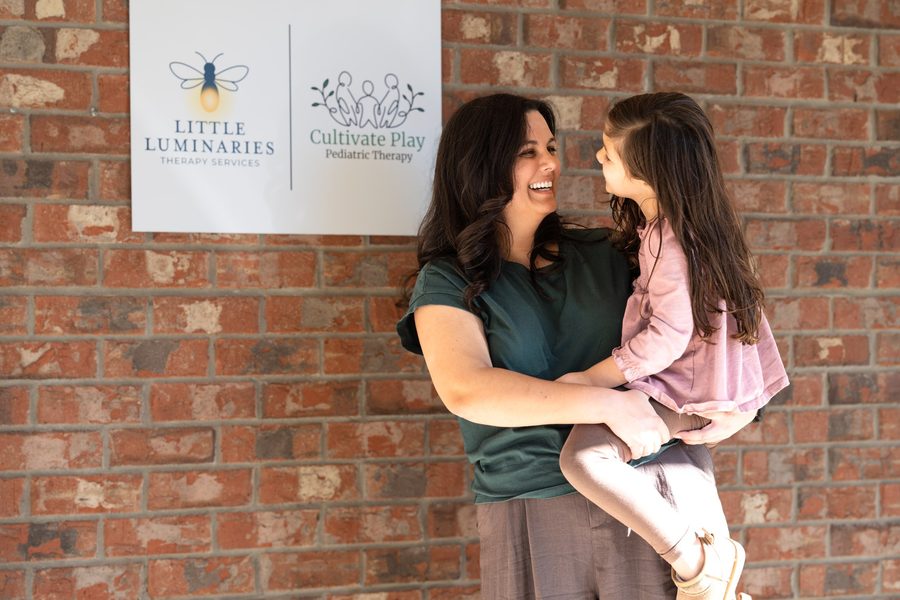
Dr. Taylor holding a child as they smile at each other outside the clinic.

Try this at home

  • Follow your child’s lead and join their play. Be the most fun toy in the room!
  • Model instead of quizzing: say what your child might say, rather than asking them to say it.
  • Pause, wait, and celebrate every way your child answers: words, sounds, gestures, or AAC.

How we can help

You’re welcome in sessions, and we share simple ideas you can use all week long. Dr. Taylor’s shop, Patchwork Speech, also has materials for practicing at home.

Free consultationCaregiver coaching

Back to all questions

How do I know if a therapist is the right fit?

Every therapy has a style. Two therapists can work on the same goal and run very different sessions. Ours are child-led, play-based, and neurodiversity-affirming, and the best fit is the one that matches your child, your goals, and your family.

Questions to ask any therapist

  1. How will this goal help my child at home and in everyday life?
  2. How can my child tell you yes, no, stop, or “I need a break”?
  3. What do you do when my child is upset or doesn’t want to do something?
  4. How do you make sure new skills show up at home, not only in the therapy room?
  5. How will you show me progress, and how often?

How we can help

We want you to feel confident in your decision. If another provider turns out to be a better fit, we’ll help make the change a smooth one.

Free consultationOur approach

Back to all questions

What does a therapy session actually look like?

It looks a lot like play, because it is. Your child leads, we follow their interests, and we build communication into every moment.

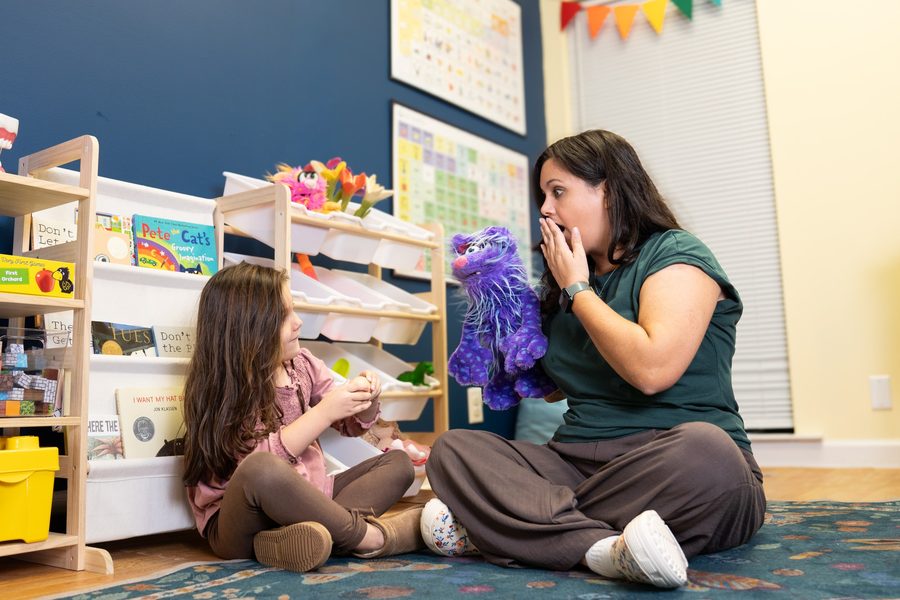
Dr. Taylor gasps with delight as a child plays beside the purple puppet.

You might see us

  • Building a fort in the sensory room and pretending to go camping
  • Painting nails in the clinic kitchen
  • Lining up farm animals, one by one
  • Puppets, kinetic sand, and lots of movement in the sensory gym

How we can help

Child-led doesn’t mean easy. We gently stretch your child, one playful challenge at a time. Sessions happen in our Murfreesboro clinic or virtually anywhere in Tennessee.

Free consultationSpeech & language therapy

Back to all questions

How do we get started? Do we need a referral?

No referral is needed. You don’t have to know what’s going on, or have the perfect words, before you reach out.

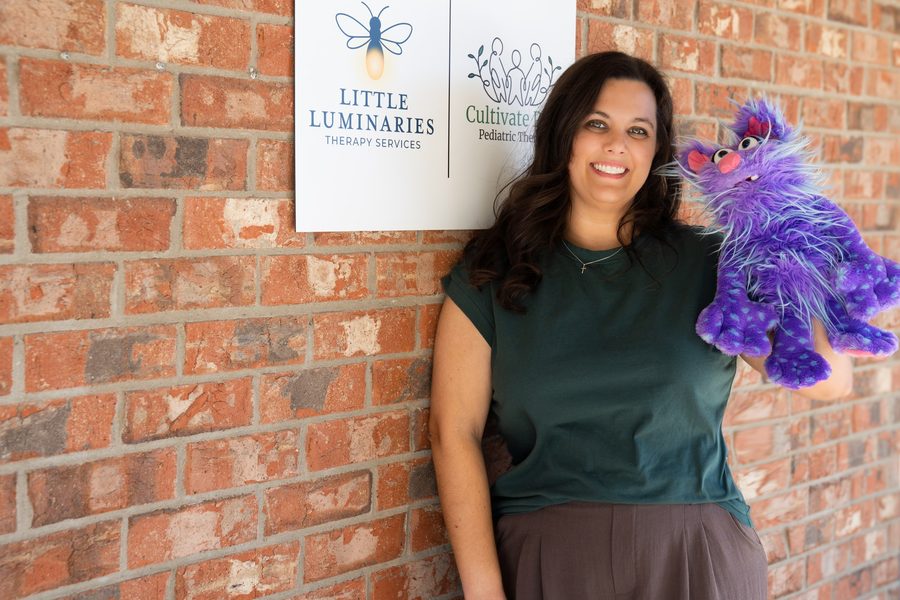
Dr. Taylor and the purple puppet smiling by the clinic sign at the front door.

Three simple steps

  1. Start with a free 15-minute conversation
  2. Complete an evaluation if it would be helpful
  3. Build a therapy or coaching plan that fits your family

How we can help

There’s no front desk here, so your message goes straight to Dr. Taylor. She can’t always pick up the phone, but she always answers texts and emails.

Free consultationStart here

Back to all questions

How does paying for therapy work?

We’re in network with most BCBS commercial PPO plans, and we offer private pay. There’s no billing department here, so cost questions go straight to Dr. Taylor.

Ways families pay

  • BCBS commercial plans (Medicaid and TennCare are not accepted)
  • Private pay, from $70 to $120 depending on session length
  • Tennessee IEA funds, for eligible services
  • Superbills for out-of-network plans, and Katie Beckett

How we can help

At your free consultation, we can look at your plan with you and talk through an estimate. Coverage varies by plan, so an estimate isn’t a guarantee of payment.

Free consultationRates & insurance

Back to all questions

Is there support for me, too?

Yes. Both of our therapists are parents of neurodivergent children, so we know this road from the inside, too. You don’t have to figure it out alone.

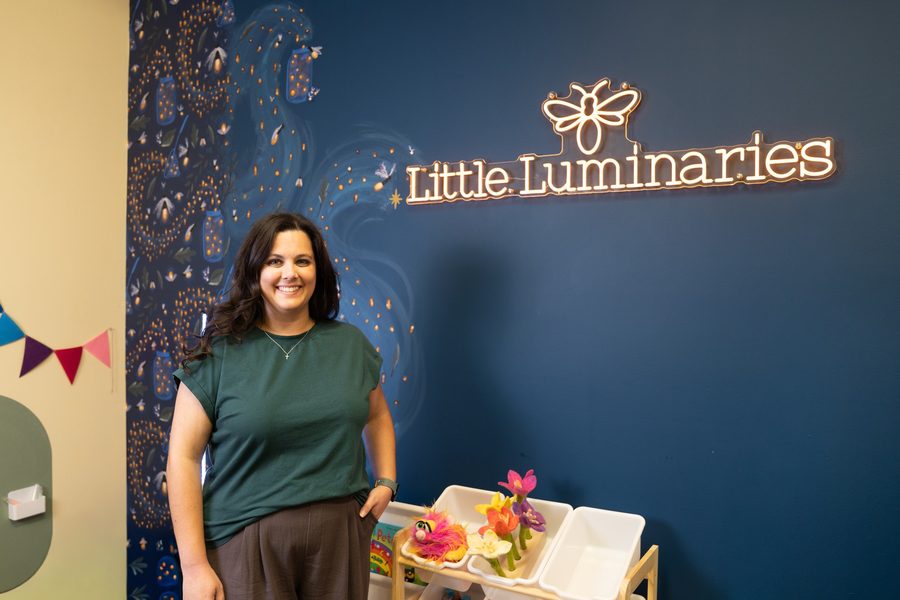
Dr. Taylor smiling in the play room under the glowing Little Luminaries sign.

Support for parents

  • A free online parent group, Thursdays from 7:00 to 8:00 PM CT
  • Caregiver coaching with practical strategies for daily routines
  • Our Special Village, a free Middle Tennessee resource hub founded by Dr. Taylor

How we can help

You’re always welcome to text or email Dr. Taylor with a question, big or small.

Thursday parent groupCaregiver coaching

Back to all questions

More support

You don’t have to figure this out alone.

Free consultation

Would a conversation help more than another article?

A free consultation is a real conversation with a speech-language pathologist about what you are noticing—no referral needed, and no pressure either way.
Free Consultation

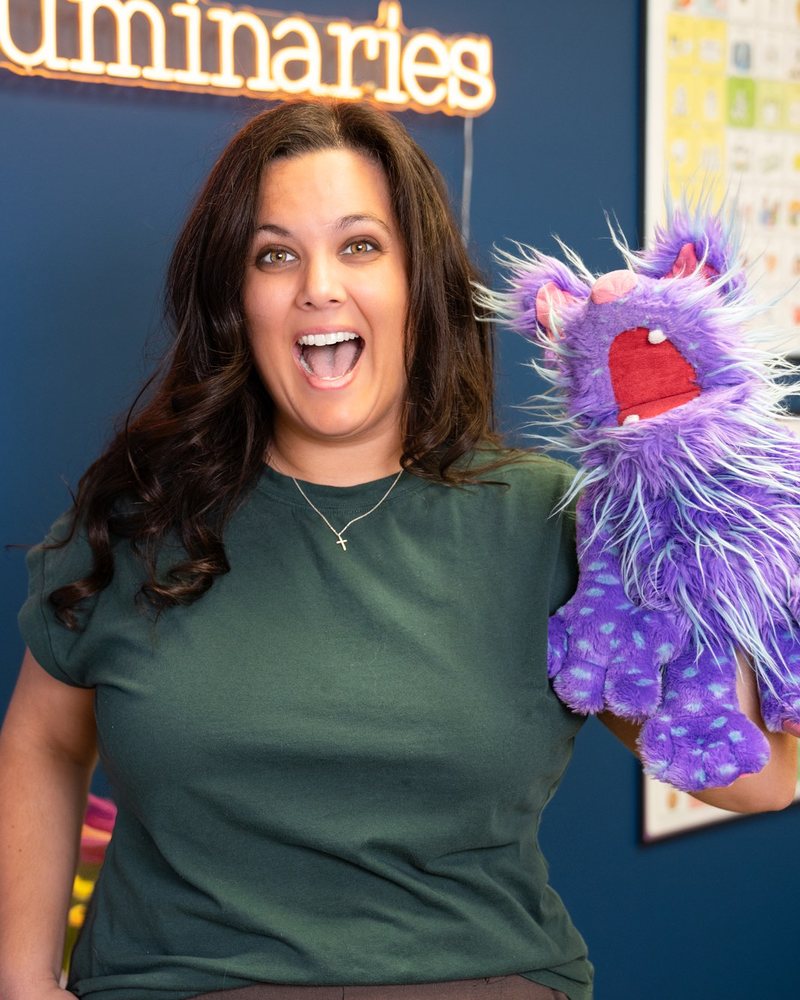
Dr. Taylor and the purple puppet, both with mouths wide open in excitement, under the glowing Little Luminaries sign.